

Back to School Car Safety Checklist: Essential Checks Before the School Run
Buy My Cars Alberton brings you a back-to-school car safety checklist, with essential checks for before the school run. The new school term brings early mornings, packed schedules and a lot more time spent behind the wheel.
Before the routine kicks in, it is worth running through a proper back-to-school car safety checklist so your car is ready for the months ahead. A few simple checks now can save you time, money and stress later.
Want to sell your car and start afresh instead?
Why a Back-to-School Car Safety Check Is So Important
Term time changes how your car is used, and that extra pressure shows up faster than most parents expect. Getting ahead of it with a school holiday car safety review means fewer surprises once your routine sets in.
Daily school runs put more strain on your vehicle
Short, stop-start trips to school and back home (and back to school again) are actually harder on a car than longer motorway drives.
How the School Run Strains Your Car
- The engine rarely reaches its ideal operating temperature
- Brakes are used more frequently
- Tyres wear unevenly from constant starting and stopping
Doing this at least twice a day, five days a week, adds up over a school term.
Small maintenance issues can become expensive repairs
A minor issue such as a slow puncture, a weak battery or worn brake pads rarely stays minor for long. Left unchecked during a busy school term, these small problems tend to turn into costly repairs.
Most times, the issue only starts to rear its head when you're running late for school. Even when your car decides not to break down at the most inconvenient moment, a car maintenance checklist done at the start of term catches these issues while they are still cheap to fix.
A roadworthy vehicle helps keep your family safe
At the end of the day, this is about more than convenience. A vehicle safety checklist done properly gives you real peace of mind that your family car is safe. That matters more during school term than almost any other time of year.
Not sure where to start, or want to understand why these checks matter so much? Our guide on why regular servicing matters explains how small issues turn into costly repairs if left unchecked.
Our Complete Back to School Car Safety Checklist
This is the core car safety checklist we recommend every parent works through before the first week of term. None of these checks take long, and most can be done from your driveway in under half an hour.
Tyres and wheel condition
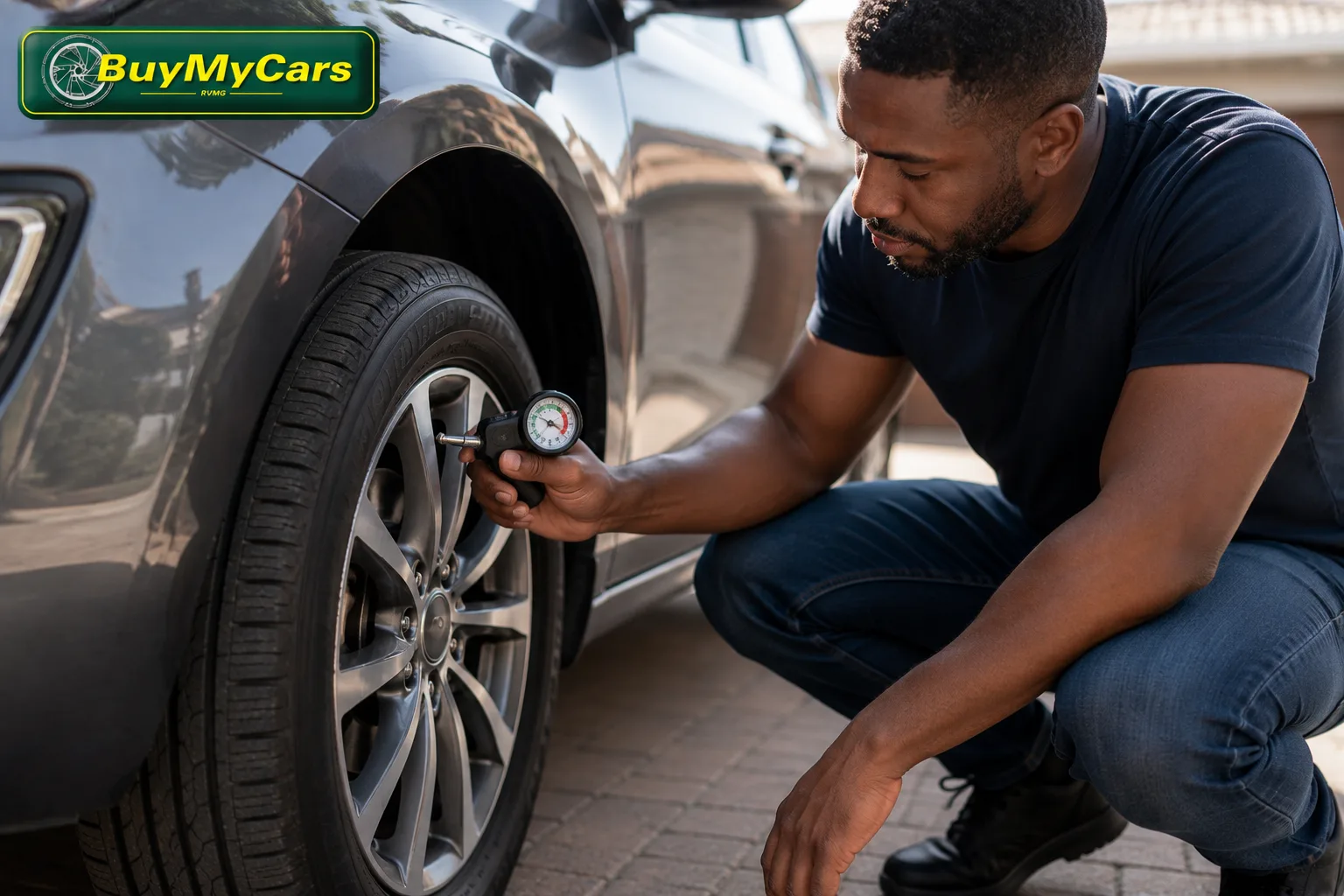
- Check tread depth on all four tyres
- Look for uneven wear
- Check for cracks in the sidewall
- Correct tyre pressure if needed
If you are unsure how to judge tyre condition properly, our guide on how to keep your tyres in good condition walks through it step by step.
Brakes and braking distance
Listen for grinding or squealing when you brake, and pay attention to whether the car pulls to one side. Soft or spongy brake pedal feel is worth having checked immediately, particularly with children in the car during school-zone traffic.
Fluid levels and engine health
Low fluid levels are one of the most common causes of avoidable breakdowns, and they are usually the easiest thing on this list to fix yourself.
Check these fluid levels before the school-run:
- Engine oil
- Coolant
- Brake fluid
- Windscreen washer fluid
Lights, indicators and visibility
Wintery mornings and afternoon rain mean your lights are doing more work during term time. Test headlights, brake lights, indicators and hazards before rushing out your gate at 7am to get to school on time.
Also be sure to replace your wiper blades if they are leaving streaks. Good visibility matters just as much for other drivers seeing you as it does for you seeing the road.
Battery and electrical health
Car batteries often fail without much warning, and the last thing any parent wants is a flat battery at drop-off. If your car has felt slower to start recently, get the battery tested before term begins rather than after it lets you down.
Child Safety Tips for the School Run
Getting the car itself sorted is only half the job. The other half is making sure every trip with your children in the car is as safe as it can be.
Make sure every child uses the correct car seat
Child car seat safety in South Africa depends on getting the seat, harness and fitting right for your child's age and size, not just having a seat in the car.
Seats that are too big, too small or fitted incorrectly offer far less protection than they should. If your child has recently had a growth spurt, it is worth checking whether they still need their current seat or booster.
Always buckle up, even for short trips
Most accidents involving children happen close to home. Often on trips that feel too short to bother with seatbelts properly. Make it a non-negotiable habit for every single trip, no matter how quick the drive to school feels.
Secure school bags and loose items
Heavy school bags, water bottles and sports equipment left loose in the car can become dangerous projectiles under sudden braking. Keep bags in the boot or secured on the floor rather than on seats. Especially if you are dropping off more than one child.
Never leave children unattended in a vehicle
South African summers get hot quickly, and a car can reach dangerous temperatures within minutes. Even with windows slightly open. Never leave children alone in the car, even for what feels like a quick errand.
Our article on why regular servicing matters explains what a full service should actually cover, which is useful if you are unsure what your car is due for.
School Run Safety Beyond the Vehicle
School run safety is not only about the car. It is also about how and where you drive it. Slow down in school zones even when you are running late. Give yourself extra time for pick up and drop off so you are not rushing through gates or driveways.
And, if wet weather is forecast, our guide on driving in the rain safely is worth a read before the first storm of the term catches you out.
When It Might Be Time to Consider a New Family Car
Sometimes a school safety checklist highlights something bigger than a quick fix. If your car needs constant repairs, no longer fits your family comfortably, or simply feels like it is reaching the end of its useful life, it may be worth thinking about your next step.
Our guide on whether to sell or trade in your car is a useful place to start, and if you decide selling makes more sense, you can read about how to sell your car without the usual hassle.
Getting Your Family Ready for the Term Ahead
Preparing your car before school term starts is one of the simplest ways to protect your family. Avoid unexpected repair bills, and make sure you are never the parent stuck on the side of the road at pick-up time. A short checklist now can prevent a much bigger headache later in the term.
If your car has been giving you trouble, or you feel it might be time to move on to something that better suits your family's needs, our team at Buy My Cars, part of the Raceview Motor Group, has bought over 1,000 vehicles from South Africans just like you.
So if you want to skip the back-to-school car safety checklist, and start with something new, get in touch with us today and get cash for your car.
Let's find out what your car is worth
Frequently Asked Questions
What should I check on my car before the school run starts?
Focus on tyres, brakes, fluid levels, lights and battery health first, since these are the areas most likely to cause a breakdown or safety issue during regular short trips.
How often should I service my car during school term?
Most manufacturers recommend a service every 15,000 kilometres or once a year, whichever comes first, but if your car is doing a lot of stop start school runs, it is worth having it checked more regularly.
Is it safe to leave my car running while dropping off my child?
It is best avoided. An unattended running car is a safety risk and, in some areas, a target for theft. Switch off the engine, even for a quick drop off.
What is the biggest car safety mistake parents make on the school run?
Rushing is the most common one. Reversing too quickly in a busy school car park or skipping a seatbelt for a short trip are both situations where a few extra seconds of caution make a real difference.
Do older cars need a more thorough back to school check?
Yes. Older vehicles are more prone to wear related issues such as worn brake components, ageing batteries and perished hoses, so a slightly more detailed inspection is worthwhile before term begins.